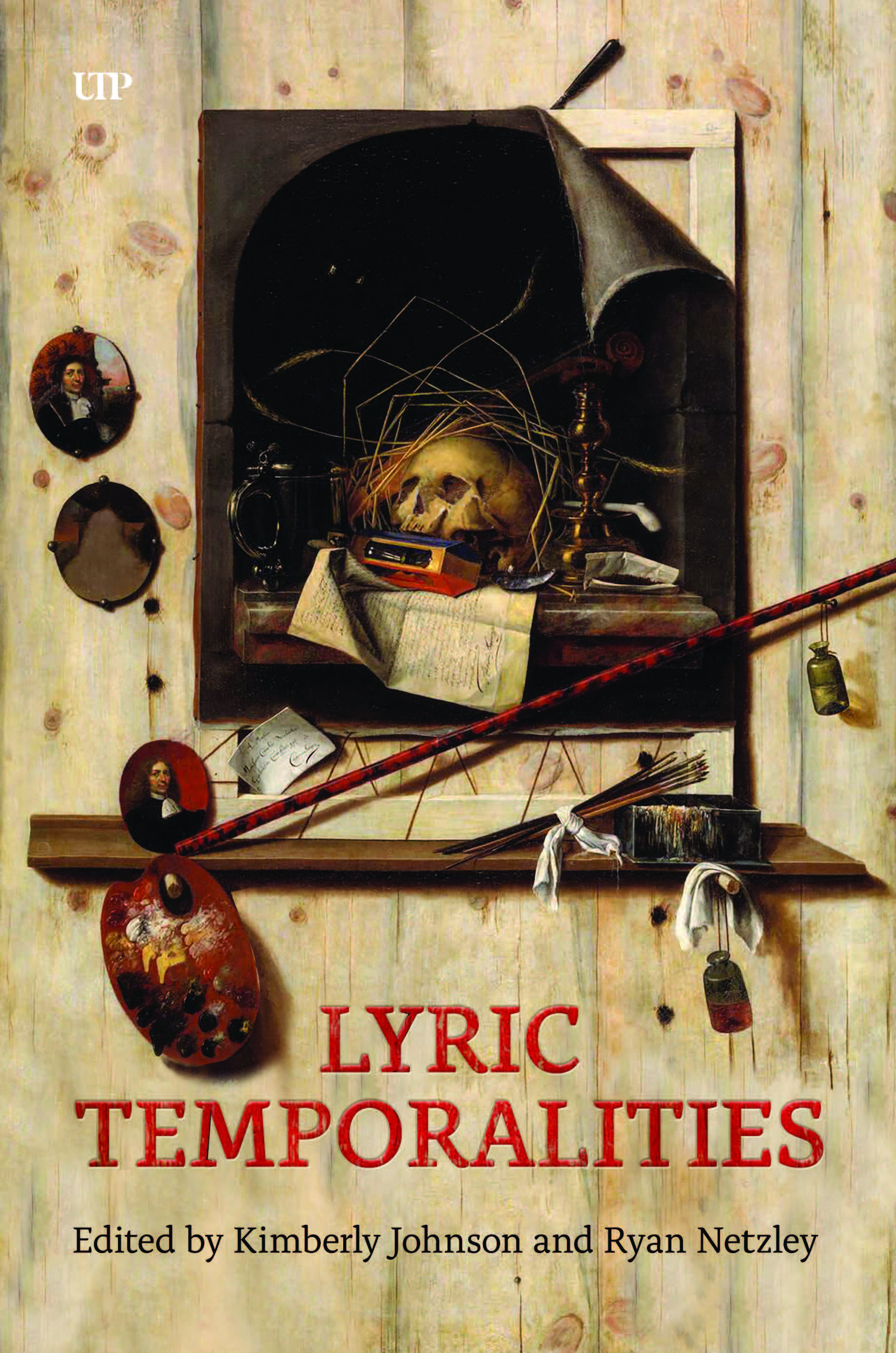
The essays in Lyric Temporalities explore lyric conceptions of time. Whether claiming to immortalize its addressees, worrying over time’s passage and the misspent youth of lovers, or even testifying to the fleeting nature of the sounds it nonetheless seeks to preserve, the lyric has for millennia taken temporality as a central subject and theme, as well as a self-conscious feature of its own form. The contributors to this volume show how these pivotal generic and historical elements operate across periods, in allusion and translation, in memories of what constitutes a known, persistent selfhood, even in speculation about what non-human timescales might look like. These essays also reveal that lyric as neither simply opposes itself to the temporal unfolding of narrative, nor stands in for presentness and its heightened emotional sensation.
 Ryan Netzley